Parashat Balak

The original debut of a talking donkey occurred not in the movie Shrek, but in this week’s Torah portion. Baalam-the-prophet was on his way to curse Bnai Yisrael, at the order of the Moabite King Balak. Balaam’s donkey drove quite frantically on the road in efforts to avert collision with an angel who was holding a sword. In response to his roller coaster of a donkey-ride, Balaam hit the donkey at each abrupt stop. Continue reading

Posted in Midrash Manicures Designs, Numbers, Weekly Torah Portions | 2 Comments

Parashat Chukat

Whenever the authors of Midrashim have a question about a particular Torah text but they don’t want to officially ask it, they will insert a character into the Midrashic narrative who will ask the question on their behalf. In Numbers Rabbah 19:8, the authors present us with an idol worshipper who questions the 1st century sage Rabbi Yochanan Ben Zakkai. Continue reading

Posted in Midrash Manicures Designs, Numbers, Weekly Torah Portions | Leave a comment

Parashat Korach

Parashat Korach, which is named for the man who stirred up a rebellion against Moshe and Aharon, begins with the words “Vayikach Korach,” “Korach took.” What is it that Korach “took?” The authors of the Midrash in Numbers Rabbah 18:3 looked to the final lines of last week’s Parasha in order to find an answer. The last lines of Parashat Shelach contain the third paragraph of the Shema, which introduces the commandment to wear Tzitzit. Continue reading

Posted in Midrash Manicures Designs, Numbers, Weekly Torah Portions | Leave a comment

Parashat Shlach

In Parashat Shelach, God tells Moshe to send twelve Meraglim, scouts, on an expedition to explore the Land of Israel. Ten out of the twelve Meraglim return with a not-so-flattering report about this land of milk and honey, telling Bnai Yisrael: “And we were in our own eyes as grasshoppers, and so we were in their eyes” (Numbers 13:33). Continue reading

Posted in Midrash Manicures Designs, Numbers, Weekly Torah Portions | 1 Comment

Parashat B’ha’alotcha

“You Light Up My Life,” the title of a song popularized in the 1970s, helps to encapsulate a theme in this week’s Parasha, which contains the commandment to light the Menorah. The Midrash in Numbers Rabbah 15:8 asks: Why did God command us to kindle the lamps? After all, God doesn’t physically need light! Continue reading

Posted in Numbers, Weekly Torah Portions | Leave a comment

Parashat Naso

This week’s Torah portion, Parashat Naso, mentions the offerings that the Nesiim, the leaders of the tribes of Bnai Yisrael, brought at the time that the Mishkan was being prepared for use. The Nesiim first offered a group gift of oxen and carts to carry the Mishkan. Following the group gift, each leader individually contributed the same gift of utensils and animals, one day at at time for twelve days. Continue reading

Posted in Midrash Manicures Designs, Numbers, Weekly Torah Portions | Leave a comment

Parashat Bamidbar

I am half way through watching an American television series called The West Wing. The fictitious American president’s staff members are always interested in polling the American public so that they can report back with numbers to help support a particular agenda. This spirit of gathering numbers resonated with me as I read through Parashat Bamidbar. Continue reading

Posted in Numbers, Weekly Torah Portions | Leave a comment

Parashat Behar/Bechukotai

Parashat Behar, which focuses on the laws concerning land ownership in Israel, urges Bnai Yisrael to support members of their community in need  (Leviticus 25:35-38). The Midrash in Leviticus Rabbah 24:3 extends the need for us to support individuals who are going through tough times to the need for us to take care of our own bodies, which may be in poor conditions. The Midrash states: At the end of a day of studying, Hillel the Elder walked out of the Beit Midrash (house of study) with his students. Hillel the Elder’s students asked him, “Where are you headed?” He answered, “To perform a religious duty.” Continue reading

Posted in Leviticus, Weekly Torah Portions | Leave a comment

Parashat Emor

A few months ago the guest list to my Shemini Atzeret dinner was growing quickly as the holiday approached. Even though I had cooked enough chicken to feed twenty, I asked a friend to pick up a pound of turkey, just to be on the safe side. About an hour before candlelighting, my friend stopped by with one pound of chopped turkey, instead of the sliced turkey which I had assumed would be clear from this last minute request. The turkey remains in my freezer to this day. Continue reading

Posted in Leviticus, Weekly Torah Portions | 7 Comments

Parashat Acharei Mot/Kedoshim

Holiness: Coming to a Community Near You
Parashat Kedoshim opens with the famous line of God telling Bnai Yisrael: “You shall be holy, for I, the Lord your God am holy” (Leviticus 19:2). The Torah could have easily stopped there, and left holiness up to our imagination. The entire chapter of Leviticus 19, however, goes on to list different ways in which we can act in holy fashions and bring holiness into our communities. Continue reading

Posted in Leviticus, Weekly Torah Portions | Leave a comment

Parashat Tazria/Metzora

This week’s double Torah portion, Parashat Tazria/Metzora, focuses on the laws concerning a “Metzora,” a person with leprosy, as well as the leprosy that spreads on garments and the walls of homes. According to the Midrash in Leviticus Rabbah 16:4, the word “Metzora” represents the words “Motzi Shem Rah,” one who utters evil reports. The rabbis understood the disease of leprosy to be caused by Lashon HaRah, evil speech. Continue reading

Posted in Leviticus, Weekly Torah Portions | Leave a comment

Parashat Shemini

In the fast paced world that we live in, sometimes we do things a little too fast. In some cases, we may be so eager to reply to an email that our tone is inappropriate or unprofessional. In other cases we may even hit “reply all” with a personal message, that will be broadcast to an entire listserve. Continue reading

Posted in Leviticus, Weekly Torah Portions | Leave a comment

Passover & Parashat Tzav

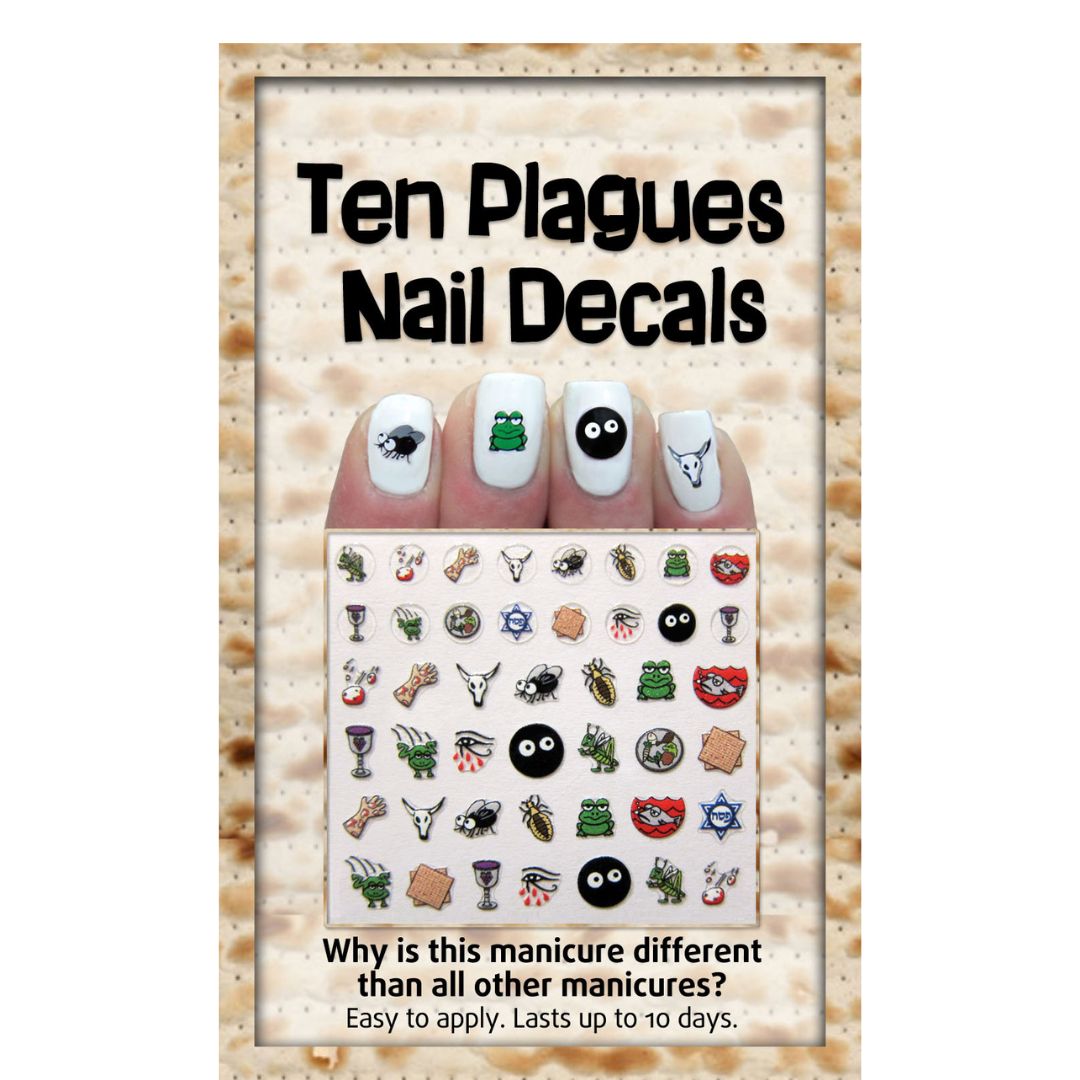
Here’s to the 2012 Midrash Manicures Ten Plagues!

Parashat Tzav

At times, reading through the details of the sacrifices mentioned in the book of Leviticus can be an exhausting exercise. The authors of the book of Midrash entitled Leviticus Rabbah, compiled around the 5th century C.E., recognized that the generations that lived after the destruction of the Second Temple would have difficulties connecting with this outdated ritual. The authors of the Midrashim often used metaphors to help us connect with the sacrificial procedures. Continue reading

Posted in Holidays, Leviticus, Weekly Torah Portions | 1 Comment

Parashat Vayikrah

When I was in the tenth grade I had to memorize each step of the sacrifices, from the slitting of the birds to the sprinkling of their blood on the altar. At the time, I found this learning experience to be quite repulsive. I wondered why the Jewish people were commanded to participate in this intricate sacrificial system in the first place. While the steps of the sacrifices listed in Parashat Vayikrah may often appear unpleasant upon first reading, I think that there is a deeper message that we can glean from their details. Continue reading

Posted in Leviticus, Weekly Torah Portions | 1 Comment

Parashat Vayakhel-Pekudei

In this week’s doubleheader of Parashat Vayakhel and Parashat Pekudei, Moshe conveys God’s instructions that anyone “whose heart so moves them” (Exodus 35:5) can donate materials toward the building of the Mishkan. Bnai Yisrael contributed so many materials that Moshe had to ask them to stop donating toward the campaign. This would be any fundraiser’s dream! Why were Bnai Yisrael so eager to contribute materials toward the construction of the Mishkan? Continue reading

Posted in Exodus, Weekly Torah Portions | 1 Comment

Parashat Ki Tissa

Parashat Ki Tissa focuses on the first edition of the tablet. Who knew that God could be so technologically savvy?  Exodus Rabbah 41:6 gives us a glimpse into the reason we now have a “Torah SheBichtav,”  a “written Torah.” The Midrash explains that even though Moshe spent all forty days of his stay on Mount Sinai trying to learn the Torah, he kept on forgetting what he had studied. Moshe cried out to God: “I’ve spent forty days studying yet I know nothing!” In response to Moshe’s complaints about his unsuccessful cramming, God gave Moshe the Torah on two tablets so that Moshe could have a visual learning tool. Continue reading

Posted in Exodus, Midrash Manicures Designs, Weekly Torah Portions | Leave a comment

Parashat Tetzaveh

Parashat Tetzaveh may read more like a fashion magazine than a typical Torah portion as it gives a detail account of the garments to be worn by the Kohen Gadol, the high priest, and the Kohanim. The Kohen Gadol is commanded to wear eight clothing items, each of which are custom-designed for his work in the Mishkan. For example, the Choshen, the breastplate, will contain twelve gemstones, each engraved with the name of a tribe of Bnai Yisrael. Exodus Rabbah 38:8 explains that the reason the stones were placed in the Choshen was so that God would see them when Aharon entered God’s service. Continue reading

Posted in Exodus, Weekly Torah Portions | 1 Comment

Parashat Terumah

In this week’s Torah portion, Parashat Terumah, God asks Bnai Yisrael to donate materials for the construction of the Mishkan, the Tabernacle. The final product of the Mishkan will become a dwelling place for God as it states: “And let them make Me a sanctuary, that I may dwell among them” (Exodus 25:8). On this verse, the Midrash in Exodus Rabbah 33:1 asks, “Can you conceive of a transaction in which the seller is sold with his goods?!” The Midrash tells a story about a king whose daughter married another king. Continue reading

Posted in Exodus, Midrash Manicures Designs, Weekly Torah Portions | Leave a comment

Parashat Mishpatim

At the same time as the rabbis wrote Midrashim, they also worked to perpetuate the importance of practicing rabbinic law, in addition to the laws of the Torah itself. This week’s Torah portion, Parashat Mishpatim, presents the rabbis with a field day of Torah laws and statutes. Several Midrashim explore the meaning of the very first Pasuk of our Parasha, “These are the rules [Mishpatim] that you shall set before them” (Exodus 21:1). Continue reading

Posted in Exodus, Midrash Manicures Designs, Weekly Torah Portions | Leave a comment

Tu Bishvat

We often recite “Shir HaMaalot” (Psalm 126) at the beginning of Birkat HaMazon, the grace after meals, on holidays and special occasions. In their latest hit “I Am Planting,” my colleagues Miriam Brosseau and Alan Jay Sufrin at Stereo Sinai, a band that blends Torah with original pop music, draw a beautiful connection between this Psalm and Tu Bishvat, that is celebrated this Wednesday. *You can enter to win Stereo Sinai’s new CD entitled “The Revelation will not be Televised” by “liking” the Tu Bishvat post on the Midrash Manicures Facebook Page! A winner will be announced following Tu Bishvat. Continue reading

Posted in Holidays | Leave a comment

Parashat Yitro

Parashat Yitro contains the Torah’s first version of the Ten Commandments. On the first commandment, Ibn Ezra, the 12th century Spanish commentator, asks the following question: Why does the Torah state that “I am the Lord your God who brought you out of the land of Egypt” (Exodus 20:2) rather than “I am the Lord your God who made the heavens and the earth, as well as humanity?” Ibn Ezra explains how the first commandment was designed to accommodate different types of learners. Continue reading

Posted in Exodus, Midrash Manicures Designs, Weekly Torah Portions | Leave a comment

Parashat Beshalach

This week’s Parasha, Parashat Beshalach, contains a scene that many of us are familiar with from the 1956 film, “The Ten Commandments.” The splitting of the Sea of Reeds is ingrained in our collective Jewish memory. The Midrash in Exodus Rabbah 11:6 asks: Why does the Torah state that the waters “were” divided rather than the water “was divided”? The Midrash explains that this comes to teach that waters in wells and fountains across the world became divided at the very moment of the splitting of the sea so as to showcase God’s miracle to the entire world. Continue reading

Posted in Exodus, Midrash Manicures Designs, Weekly Torah Portions | 1 Comment

Parashat Bo

Compared to lice, boils, and blood, was the plague of darkness really that bad? The Midrashim that discuss the plague of darkness emphasize the danger and severity of this plague. In Exodus Rabbah 14:2, Rabbi Nechemiah makes it clear that the plague of darkness was not a typical form of darkness as he believed that this darkness came from Gehenom, hell. Exodus Rabbah 14:3 discusses how the this darkness was a physically thick substance. For the first three days of the plague, individuals who were sitting or standing could change their positions, but during the next three days of the plague, individuals could not sit, stand, or even get out of bed. Continue reading

Posted in Exodus, Weekly Torah Portions | Leave a comment

Parashat Va’era

Pharaoh would not have been a big fan of Hogwarts School of Witchcraft and Wizardry as he truly believed that Egypt was the center for magic arts. In this week’s Torah portion, Parashat Va’era, Moshe and Aharon initially tried to prove God’s wonders to Pharaoh by demonstrating how Aharon’s staff could turn into snake. The Midrash in Exodus Rabbah 9:4 states that when Pharaoh’s magicians replicated the ‘trick’ that had been performed by Moshe and Aharon, the magicians teased them, saying: “You are bringing straw to Afarim [a city famous for its straw]!” Continue reading

Posted in Exodus, Midrash Manicures Designs, Weekly Torah Portions | 2 Comments

Parashat Shemot

This week’s Parasha, Parashat Shemot, sets into motion a sequence of events that will propel Moshe’s leadership of the Jewish people. The narrative about baby Moshe in his basket lacks the mention of one important figure: God. Since the rabbis seek to link God directly with the earliest stages of Moshe’s life, the Midrashim turn their attention to Pharaoh’s daughter and her connection with God. Continue reading

Posted in Exodus, Weekly Torah Portions | 3 Comments

Parashat Vayechi

Sibling rivalry presents as a major source of conflict throughout the book of Bereshit. At the conclusion of the section of sons’ blessings, the Torah states “Every one according to his blessing, he [Yaakov] blessed them.” (Genesis 49:28) The Midrash in Genesis Rabbah 97:1 explains that the Torah states “he blessed them” rather than “he blessed him,” as would be grammatically appropriate, to teach us that Yaakov gave an equally unique blessing to each son. The Torah ultimately emphasizes that in his last days, Yaakov was careful to not use favoritism when distributing the blessings. Continue reading

Posted in Genesis, Midrash Manicures Designs, Weekly Torah Portions | 2 Comments

Parashat Vayigash

How many of us have family stories that seem to get embellished each year? In this week’s Torah portion, Parashat Vayigash, we read about Yaakov who does a reverse commute from Israel to Egypt. Yaakov, who was overly joyed at the news that Yosef was alive, decided to immediately go down to Egypt with the rest of his family to see Yosef. It was not easy to transport an entire family from Israel to Egypt, without the advent of cars or airplanes, but this did not stop Yaakov from reuniting with his beloved son. Parashat Vayigash features extensive lists of Yaakov’s children and grandchildren, ultimately declaring that a total of seventy people went down to Egypt. Continue reading

Posted in Genesis, Midrash Manicures Designs, Weekly Torah Portions | 1 Comment

Parashat Miketz

Have you ever woken up and tried to analyze the meaning of your dream? Thanks to the efforts of Sigmund Freud and others, dream interpretation is now a hallmark of psychoanalysis. Long before Freud, there lived another Jew who came to be known for his cutting-edge dream interpretations, namely, Yosef. In this week’s Torah portion, Parashat Miketz, Pharoah is plagued with confusing dreams that contain images of undernourished and overfed cows, as well as healthy and dried-out ears of grain. Continue reading

Posted in Genesis, Midrash Manicures Designs, Weekly Torah Portions | Leave a comment

Parashat Vayeshev

“Don’t give up Joseph, fight till you drop, We’ve read the book and you come out on top!” These words, from the popular musical  Joseph and the Amazing Technicolor Dreamcoat, ring true in this week’s Torah portion, Parashat Vayeshev. We are initially introduced to Yosef who has “come out on top,” as he is the favored son of Yaakov, and is bestowed with a multicolor coat. Yosef is not afraid to boast about his favored status, as he subjects his family to hearing the details of his self-aggrandizing dreams. Continue reading

Posted in Genesis, Midrash Manicures Designs, Weekly Torah Portions | 1 Comment

Parashat Vayishlach

While reunions are often celebratory occasions, they sometimes evoke mixed emotions. Yaakov is one person who certainly knows from pre-reunion anxiety. As Yaakov’s reunion with his twin brother Esav approaches, he is plagued by fears about how this reunion will play out. After all, the last time Yaakov and Esav were in the same town, Esav wanted to kill him! Continue reading

Posted in Genesis, Weekly Torah Portions | Leave a comment

Parashat Vayetze

While American soap operas might be on their last legs, there is one soap opera that we tune into every year: the story of Yaakov, Rachel, and Leah. Since JDate had yet to be created, Yaakov needed to find a wife the old fashion way, by heading to the well. In Parashat Vayetze, Yaakov meets his gorgeous first-cousin Rachel and immediately kisses her and cries. The Midrash in Genesis Rabbah 70:12 states that kissing is “indecent” behavior except for in a few cases, including when family members unite (which is why the Midrash rates the scene in our Torah portion as “PG”). Continue reading

Posted in Genesis, Midrash Manicures Designs, Weekly Torah Portions | Leave a comment

Parashat Toledot & Thanksgiving

“Two nations are in your womb” (Genesis 25:23) This week’s Torah portion, Parashat Toledot, highlights how the sibling rivarly between Yaakov and Esav began in utero. The Midrash in Genesis Rabbah 63:5 teaches that whenever Rivka stood near a house of Torah study, Yaakov attempted to exit her womb, and whenever she passed idolatrous temples, Esav struggled to get out.

Continue reading

Posted in American Holidays, Genesis, Holidays, Midrash Manicures Designs, Weekly Torah Portions | Leave a comment

Parashat Chayei Sarah

Parashat Chayei Sarah introduces us to the first human matchmaker, Avraham’s servant Eliezer. Eliezer is on a mission to find a wife for Yitzchak, and his first stop is a hot spot for singles: the well. At the well, Rivka graciously draws water for Eliezer and his camels. Israeli Torah scholar Nehama Leibowitz points out that the Torah emphasizes on three occasions that Rivka drew water for Eliezer and his animals in order to highlight her virtuosity and selflessness. That is a lot of shlepping for a complete stranger! Continue reading

Posted in Genesis, Midrash Manicures Designs, Weekly Torah Portions | 1 Comment

Parashat Vayera

Heat Wave Parashat Vayera begins by telling us that there was a heat wave on the very day that Avraham welcomed some unexpected visitors. The Midrash in Genesis Rabbah 48:8 wonders why God created such hot weather that day. The Midrash states that when Avraham was recovering from circumcising himself, God thought, “Why should Avraham be in pain while the entire world is at ease?” Therefore, God created a heat wave while Avraham was in recovery as it says, “the day grew hot.” (Genesis 18:1) Continue reading

Posted in Genesis, Midrash Manicures Designs, Weekly Torah Portions | Leave a comment

Parashat Lech Lecha

Idols for Sale! Why did God choose Avraham to be the first Jew? Parashat Lech Lecha states that God told Avraham to leave his homeland for “the land that I will show you” (Genesis 12:1) but the Torah does not give any details about Abraham’s past. The following Midrash in Genesis Rabbah 38:13 gives us a glimpse into Avraham’s childhood: Continue reading

Posted in Genesis, Midrash Manicures Designs, Weekly Torah Portions | 1 Comment

Parashat Noah

Noah is in the 1% of ‘Occupy Ark!’ “Noah was a righteous man; he was blameless in his generation” (Genesis 6:9) The Midrash in Genesis Rabbah 30:9 states that when the Torah says that Noah was righteous in his generation this means that Noah was righteous by the standard of his generation. Had Noah lived during the generation of Moses or Samuel, he would not have qualified as righteous! Continue reading

Posted in Genesis, Midrash Manicures Designs, Weekly Torah Portions | Leave a comment

Parashat Bereshit

The book of Midrash entitled “Genesis Rabbah” is a compilation of Midrashim based on the book of Genesis, and the first 18 chapters are devoted to the creation story, found in Parashat Bereshit. Below are highlights from Genesis Rabbah’s take on the creation story: Continue reading

Posted in Genesis, Midrash Manicures Designs, Weekly Torah Portions | Leave a comment

Simchat Torah & V’Zot HaBrachah

In our whirlwind of holidays in the month of Tishrei, Shemini Atzeret tends to escape the spotlight. Why are we are commanded to celebrate Shemini Atzeret? The Babylonian Talmud in Sukkah 55b tells the story of a king who invited all of his children to join him in a feast for a certain number of days. When it came time for his children to leave, the king begged them to stay on for an additional day, as the prospect of separation from them was hard for him. Continue reading

Posted in Holidays, Midrash Manicures Designs, Simchat Torah | Leave a comment

Sukkot

“Shake, Shake, Shake, Shake Your Lulav” is a popular phrase heard throughout Sukkot. Why are we shaking the Lulav and Etrog in the first place? Unless you have good hand-eye coordination, holding a siddur, an Etrog, and a Lulav is no easy feat! The Midrash in Leviticus Rabbah 30:14 teaches that there is unique symbolism behind each of the ritual items waved on Sukkot. Continue reading

Posted in Holidays, Midrash Manicures Designs, Sukkot | Leave a comment

Yom Kippur

Cleaning up our homes often involves sweeping the floors, scrubbing the countertops, and tossing clothing into closets before guests arrive. Rarely, do we get down on our hands and knees and clean up the hard-to-reach layers of shmutz. My teacher and colleague, Rabbi Sharon Brous, suggests that Yom Kippur is a day of spiritual and moral deep cleansing, a day for us to begin to work through our own layers of shmutz. Continue reading

Posted in Holidays, Midrash Manicures Designs, Yom Kippur | 1 Comment

Rosh HaShanah & Parashat Haazinu

Did you hear that God has gone digital? Moses must have forgotten to mention this in his final speech to the people of Israel mentioned in this week’s Torah portion, Parashat Ha’azinu. This year God will inscribe us in the newest version of the iPad, rather than the typical Book of Life. We have become what a graduating senior from the Jewish Theological Seminary called “People of the Nook.” Continue reading

Posted in Holidays, Midrash Manicures Designs, Rosh HaShanah, Weekly Torah Portions | Leave a comment

Parashat Nitzavim-Vayelech

The Midrash in Devarim Rabbah 8:6 asks “What is the meaning of ‘it is not in the heavens?’” (Deuteronomy 30:12) The Midrash explains that this Pasuk, found in Parashat Nitzavim, is meant to teach that the Torah is not to be found among astrologers whose primary work is to gaze at the heavens. Continue reading

Posted in Weekly Torah Portions | Leave a comment

Parashat Ki Tavo

“Blessed shall you be in the city and blessed shall you be in the country.” (Deuteronomy 28:3) The Torah, unlike the character of Carrie Bradshaw from Sex & The City, does not make a judgment call for which is a better place to reside, the city or the country. The Midrash in Devarim Rabbah 7:5 teaches that the phrase “in the city” refers to the rewards for the active mitzvot we perform while in a city, including sitting in the Sukkah and lighting candles for Shabbat. Continue reading

Posted in Weekly Torah Portions | 2 Comments

Parashat Ki Tetzeh

“Do not take the mother together with her young” (Deuteronomy 22:6) Parashat Ki Tetzeh contains what some might view as an odd commandment, namely, “Shiluach HaKen,” the mitzvah for us to remove the mother bird from the nest before taking her young. This mitzvah is meant to inspire us to become more compassionate through sensitivity toward the mother bird. The Midrash in Devarim Rabbah 6:3 teaches us that even if we are not engaged in any particular work but are traveling along a road, the mitzvah of Shiluach HaKen, will always be with us. Continue reading

Posted in Weekly Torah Portions | 1 Comment

Parashat Shoftim

The prophet Samuel is notorious for chastising the Jewish people when they asked for a king. In Parashat Shoftim, however, we see that God permits Bnai Yisrael to appoint a king for themselves when they settle in the land of Israel. Why would Samuel take such offense at the people’s request for a king when Parashat Shoftim explicitly mentions that God will allow this to occur? Continue reading

Posted in Weekly Torah Portions | Leave a comment

Parashat Re’eh

Parashat Re’eh contains a list of “clean” and “unclean” animals which became the basis for practices of keeping kosher today. According to Sue Fishkoff, author of Kosher Nation, only 14% of individuals who buy kosher products do so because they are following the laws of Kashrut. Many people simply believe that Kosher products are cleaner, safer, and higher quality, than non-Kosher products. Continue reading

Posted in Weekly Torah Portions | Leave a comment

Parashat Ekev

“In order to teach you that man does not live on bread alone, but that man may live on anything that God decrees.”  (Deuteronomy 8:3) While Bnai Yisrael were journeying through the desert God provided them with a special kind of food, namely manna, in order to soothe their hunger. Food alone, though, was not enough to sustain Bnai Yisrael. Bnai Yisrael needed God’s love and God’s Torah in order to make it through the desert of their lives. Continue reading

Posted in Weekly Torah Portions | Leave a comment

Parashat VaEtchanan

“You shall not add anything to what I command you or take anything away from it” (Deuteronomy 4:2) At first glance, Moses’ instruction to Bnai Yisrael seems a bit extreme, given that the written Torah could not possibly cover every law that would ever govern society. In its context however, it is clear that Moshe is referring to the issue of pagan worship, as he makes reference to the fact that God wiped out the 24,000 members of Bnai Yisrael who worshiped Baal Peor. Continue reading

Posted in Weekly Torah Portions | Leave a comment

Parashat Devarim

Standing on the brink of death, Moshe rebukes the generation before him, but promises that the future generation, those who do not yet know good from bad, will possess the land. The children who comprise the future generation are caught between the baggage of their parents’ desert experience and their own hopes for a future in the land of Israel. How will the children inhabit the land? How will they continue with the traditions from their past? Continue reading

Posted in Weekly Torah Portions | Leave a comment

Parashat Masei

In Parashat Masei, God tells Moshe to instruct Bnai Yisrael about the boundaries for when they enter the Land of Canaan (Numbers 34:1-12) Rav Adda the son of Rabbi Chanina believed that if Bnai Yisrael had not sinned, they would only have received the five books of the Torah and the book of Joshua, since these books contain the records of the boundaries and dimensions of the Land of Israel. Rav Adda the son of Rabbi Chanina claimed that God gave Bnai Yisrael the remainder of the books in the canon of the Tanach, including the Neviim (Prophets) and Ketuvim (Writings), since the content of these books often included God’s anger at the sins of Bnai Yisrael.  (Talmud Bavli, Nedarim 22b) Continue reading

Posted in Weekly Torah Portions | 1 Comment