Parashat Balak: Blind Spots

Donkey Nail ArtDid a parent or teacher ever give you permission to do something but then get upset with you when you actually did it? This seems to be the case for Balaam in this week’s Parasha.  Hashem allowed Balaam to go out to curse Bnai Yisrael but Hashem became angry when Balaam actually set out on his way. When Balaam was mid-course, Balaam’s donkey stopped short and refused to move. Little did Balaam know that Hashem had sent an angel with a sword in his path. Balaam hit his donkey in anger each time the donkey came to a halt.  Hashem opened the mouth of the donkey to rebuke Balaam for his actions and only then was the angel revealed to Balaam.

  • Why do you think Hashem gave permission to Balaam to curse Bnai Yisrael in the first place?
  • Are there times in life when we are blind to something right in front of us?
Posted in Midrash Manicures Designs, Numbers, Weekly Torah Portions | Leave a comment

Chukat: Ritual Detergent

Red Heifer Cow Nail ArtHave you ever had a really tough stain that requires immediate attention? Local pharmacies often keep stain sticks, wipes and other forms of remover right near the checkout lines. In Parashat Chukat, we read about what the bible scholar Jacob Milgrom refers to as a “ritual detergent,” namely the ashes of the Parah Adumah, or red heifer. The Torah treats human contact with a corpse as requiring immediate attention through ritual purification. Continue reading

Posted in Midrash Manicures Designs, Numbers, Weekly Torah Portions | Leave a comment

Korach: Leadership Blossoms

Almond Blossoms Nail Art KorachKorach’s rebellion challenged the legitimacy of the leadership of Moshe and Aharon. Right after Korach and his followers were destroyed, Hashem instructed Moshe to take twelve rods and to inscribe on them the name of the leader of each tribe. Overnight, the rod with Aharon’s name on it blossomed with leaves, flowers, and almonds (Bamidbar 17:23). This miracle signified that Aharon was chosen as the high priest and reconfirmed the role of the Kohanim in the spiritual leadership of Bnai Yisrael. Continue reading

Posted in Midrash Manicures Designs, Numbers, Weekly Torah Portions | Leave a comment

Shlach: They Might Be Giants

NY Giants Nail ArtThe Midrash in Bamidbar Rabah 16:11 asks: How do you scare a child? You remind the child of things that hurt them in the past. In Parashat Shlach, ten out of the twelve spies take advantage of Bnai Yisrael’s collective childhood memories. In describing the negative traits of the Land of Israel, the ten spies first speak about the presence of the people of Amalek in Israel. The people of Amalek were known for attacking Bnai Yisrael from the back, attacking the women, children and elderly first. The spies also mention that there are giants living in the land of Israel. Continue reading

Posted in Midrash Manicures Designs, Numbers, Weekly Torah Portions | Leave a comment

B’haalotcha: Cravings

Bird nail artIn Parashat B’haalotcha, members Bnai Yisrael complained to Moshe that they were tired of eating Manna day in and day out and that they wished to eat meat. The Spanish scholar Rabenu Bachya explains how Manna was meant to elevate Bnai Yisrael on a spiritual level, but not necessarily satisfy them on physical level. Bnai Yisrael desired something that was less bland and more physically satiating. Hashem’s response to Bnai Yisrael’s complaint was to send down swarms of quail. Members of Bnai Yisrael who ate the quail were struck with a plague that took their lives. Continue reading

Posted in Midrash Manicures Designs, Numbers, Weekly Torah Portions | Leave a comment

Nasso: The Case of the Sotah

Sotah Nail ArtThe episode of the scarlet letter seems minimal compared to the ordeals of the Sotah, found in this week’s Parasha. Bible scholar Alice Bach explains how the Sotah, the case of a woman accused by her husband of adultery, is the only instance in the Torah when a person can be accused of a capital crime without two witnesses. Once accused by her husband, as part of the ritual, the woman was brought before a Kohen and required to drink bitter waters filled with dust from the floor. Continue reading

Posted in Numbers, Weekly Torah Portions | Leave a comment

Bamidbar: Unplugged

Plug Nail ArtHow often do we truly unplug? Sometimes we need to take a vacation in another place in order to distance ourselves from being attached to our iPhones and other electronic devices. Parashat Bamidbar presents an interesting take on how location can affect our ability to focus. The Midrash in Bamidbar Rabbah 6:1 explains that Hashem purposely chose the “Midbar,” the desert, as the location in which to give Bnai Yisrael the Torah. The desert was a place with less distractions and more opportunity for Bnai Yisrael to recognize their dependence on Hashem. Continue reading

Posted in Leviticus, Weekly Torah Portions | Leave a comment

Behar/Bechukotai: Holy Garbage

Apples Nail Art Shemita YearOnce every seven years, the Torah forbids any planting, pruning, plowing, or harvesting of the land in Israel. This year-long rest for the land of Israel, which is called the Shmita year, is one of the biblical agricultural commandments described in Parashat Behar that we still observe in modern times.  Jewish law explains how all of the fruits and vegetables that grow during the Shmita year possess a level of holiness. Continue reading

Posted in Leviticus, Midrash Manicures Designs, Weekly Torah Portions | Leave a comment

Emor: Biblical Purell

Bacteria nail artWorking in a school surrounded by Purell dispensers at every corner, it seems that the theme of purity and impurity highlighted in Parashat Emor continues to manifest in modern society. As the Kohanim are the ritual leaders of Bnai Yisrael, the Torah states how it is important for them to be distanced from ritual impurity. Parashat Emor teaches that the Kohanim are forbidden to be in contact with dead bodies except for those of close relatives. The Kohanim are also not permitted to enter a home or an enclosure that contains a dead body. Why were the Kohanim given so many rules about purity? Continue reading

Posted in Leviticus, Midrash Manicures Designs, Weekly Torah Portions | Leave a comment

Israel Nail Art Tutorial & Acharei Mot/Kedoshim

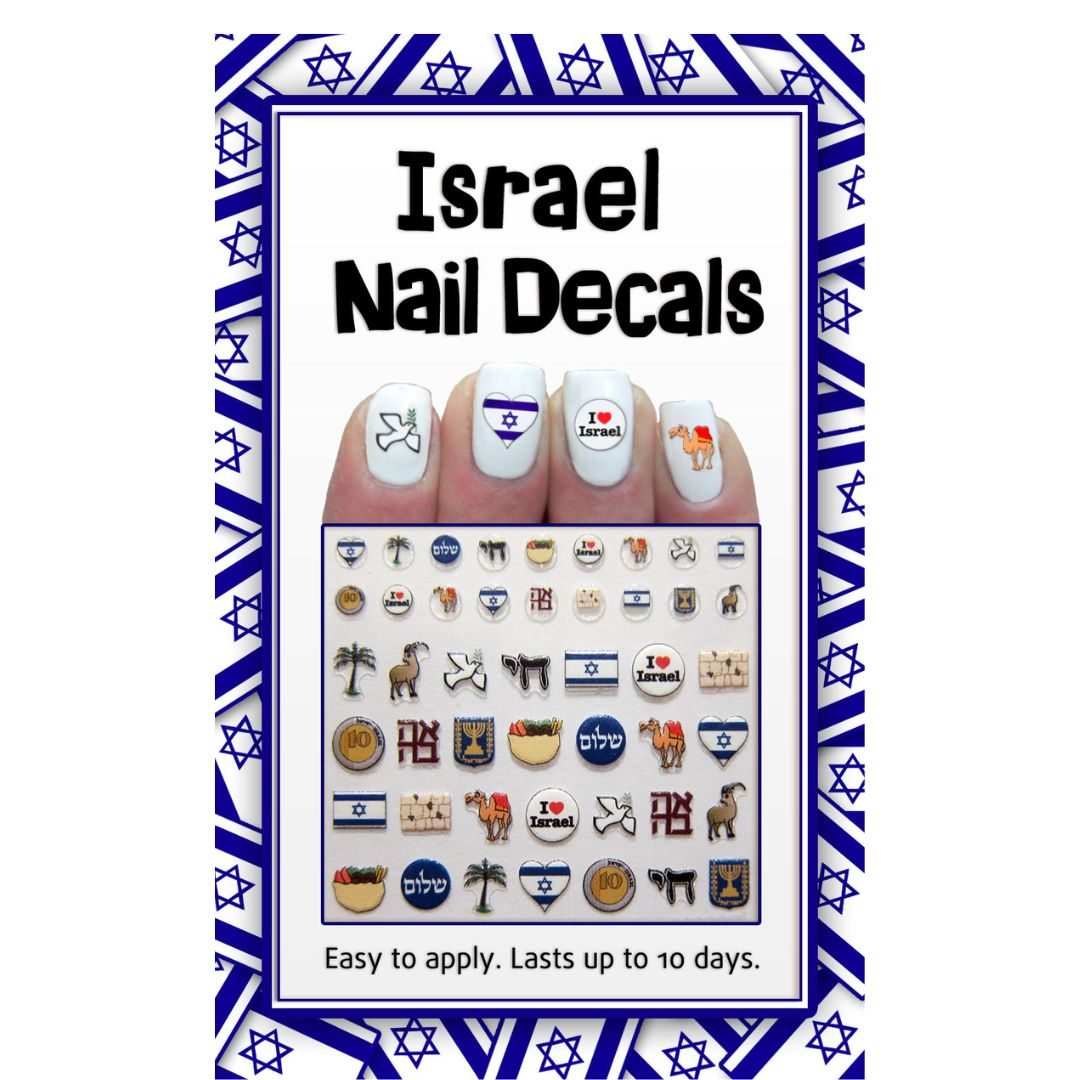
Israeli Flag Nail Art TutorialIsrael Nail Art In honor of Israel’s 65th birthday this Tuesday, Midrash Manicures has created our first-ever nail art tutorial! We hope you enjoy painting your very own Midrash Manicures. You’ll need three items to help you paint Israeli flags on your nails: toothpicks, white nail polish, and blue nail polish. Once your white coat is dry, dip the tip of a toothpick into the blue nail polish brush and paint the star and stripes in gentle strokes, dipping the toothpick back into the polish brush as needed. Looking forward to fabulous Israel manicures! Happy Yom HaAtzmaut!

Feather nail art Lashon HarahSticks & Stones Parashat Kedoshim covers many laws that govern the interactions between people. The Parasha states, “Do not go as a talebearer among your people” (Vayikra 19:16). Unlike  the saying “sticks and stones may break your bones…” the Torah believes that words can be harmful. A story is told about a student who went to his rabbi to tell him that he felt guilty since he spread gossip about one of his classmates. He asked the rabbi what he could do to make amends. Continue reading

Posted in Leviticus, Midrash Manicures Designs, Weekly Torah Portions | Leave a comment

Tazria/Metzorah: The Birds & The Bees

Birds and Bees Nail ArtParashat Tazria describes how the mother of a newborn is required to bring sacrifices to Hashem  in gratitude for a successful pregnancy. The Midrash in Vayikra Rabbah 14:3 asks: “If a person carries a bag of money with the opening facing downwards, don’t the coins scatter?!” The Midrash responds: “Now the embryo has its place in the mother’s womb, but Hashem guards it so that it should not fall out. Is that not a matter of praise?” Continue reading

Posted in Weekly Torah Portions, Midrash Manicures Designs, Leviticus | Leave a comment

Shemini: Strange Fire & Modern Ten Plagues Manicure

Fire Nail ArtIn Parashat Shemini, Aharon’s sons Nadav and Avihu are killed by fire for bringing an “Esh Zarah,” a strange offering, to Hashem. The rabbis utilize several explanations for why Nadav and Avihu received such a harsh decree. The authors of the Sifra, which is halachic Midrash on Vayikrah, explain that since the Torah states that Nadav and Avihu “each took his own censer” (Vayikrah 10:1) this means that they not only acted without consulting their father or Moshe, but that they also acted without seeking advice from one another (Sifra Acharei Mot 1). Continue reading

Posted in Leviticus, Midrash Manicures Designs, Weekly Torah Portions | 1 Comment

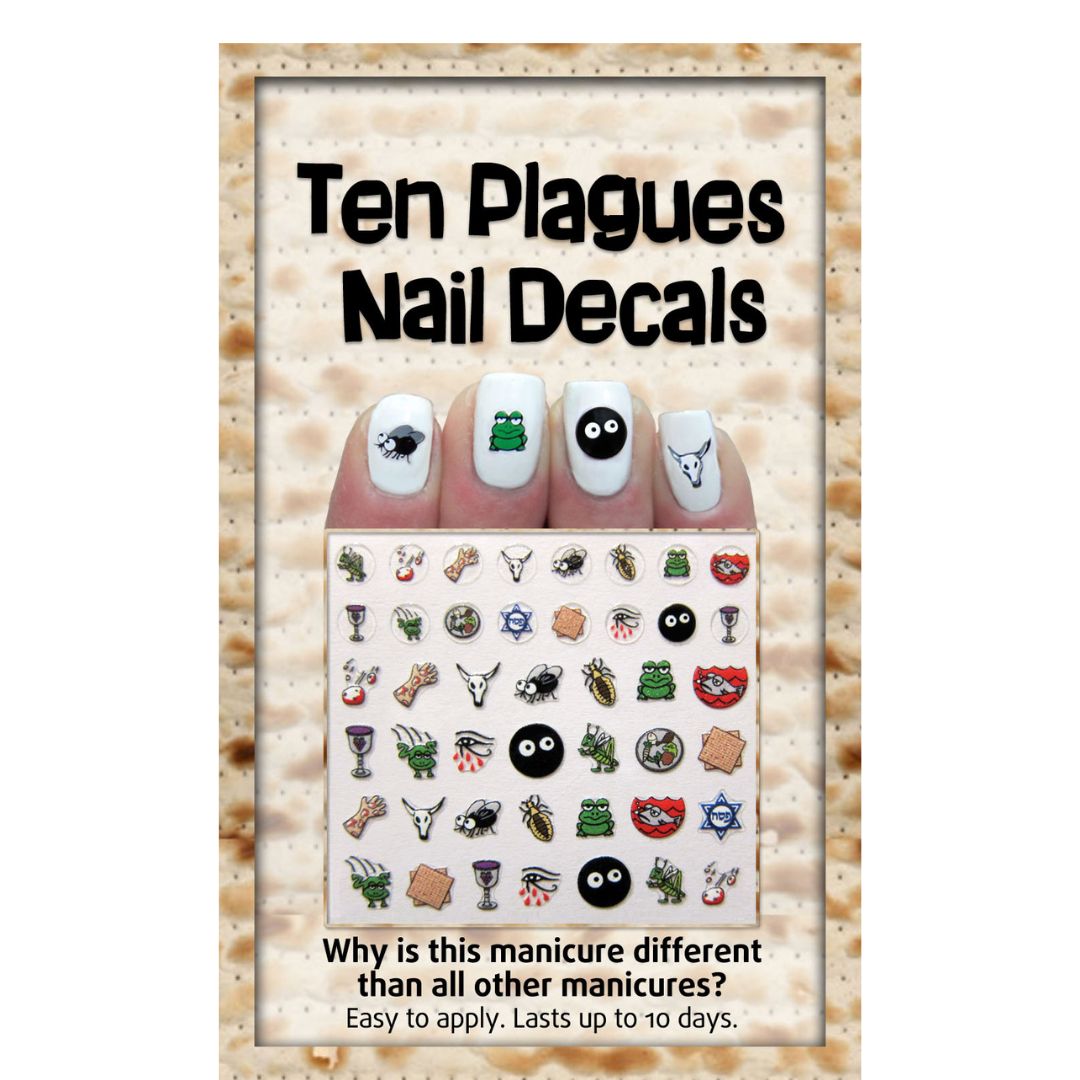
Check out our Modern Ten Plagues Manicure!

Ten Modern Plagues - MidrashManicures.com

Continue reading

Posted in Midrash Manicures Designs, Passover | Leave a comment

Last Call for Ten Plagues Decals & Tzav: Holy Fashions

Kohen breastplateTzav: Holy Fashions Just as we witnessed the installation of a new pope last week, Parashat Tzav describes the details involved in the ordination of the Kohen Gadol, the High Priest. Fashion plays a major role in the installation of Aharon and his sons. The Torah spends more time discussing the clothing of the priests than of any other biblical personality! Aharon, the Kohen Gadol, was required to wear a breastplate with twelve gem stones, each of which was inscribed with the names of the twelve tribes of Israel. Continue reading

Posted in Weekly Torah Portions, Midrash Manicures Designs, Leviticus | Leave a comment

Vayikrah: BBQ Time

Watermelon nail art BBQVayikrah: BBQ Time You know that summer has arrived when the air is filled with the smell of local barbeques. In Parashat Vayikrah, we learn that God enjoyed the smell of barbeques. Biblical barbeques, or sacrifices, needed to have a “fire of pleasing odor” to God (Vayikra 1: 9). Why did God decide to give Bnai Yisrael the laws of the sacrifices at this point in the Torah? The Midrash in Tanchuma Terumah 8 explains: “God wanted the gold of the tabernacle to atone for the gold that was donated for the golden calf.” While Bnai Yisrael were eager to Continue reading

Posted in Leviticus, Midrash Manicures Designs, Weekly Torah Portions | Leave a comment

Vayakhel/Pekudei: The Artist

Paintbrush artist Nail artThe concluding Parshiyot of Sefer Shemot focus on the work that Betzalel, Bnai Yisrael’s artist-in-residence, did to complete the construction of the Mishkan. When Moshe introduces Betzalel’s work to Bnai Yisrael he states,  “See! Hashem has called by name, Betzalel” (Shemot 35:30). Ramban, Nachmanides, states that the word “see!” emphasizes how out of the ordinary it was to come upon a person as skilled as Betzalel. Since Bnai Yisrael were mostly accustomed to working with brick and mortar, it was unusual to find an Continue reading

Posted in Weekly Torah Portions, Midrash Manicures Designs, Exodus | Leave a comment

Purim & Ki Tissa: Holiness in Time

Hamantaschen nail artChag Purim Sameach from Midrash Manicures! We hope you have a fabulous day of Purim celebrations. Check out our Midrash Manicures Hamantaschen, fresh from the bottle!

Watch Nail ArtIn Ki Tissa, as we wrap up with the instructions for the Mishkan, we take a commercial break for a message from our Sponsor about Shabbat. Hashem tells Moshe to convey to Bnai Yisrael, “Nevertheless, you must keep my Shabbatot” (Exodus 31:13). The use of the Hebrew word “Ach” “nevertheless” indicates that Hashem wanted to make it clear that the construction of the Mishkan, holiness in space, should not supercede the observance of Shabbat, holiness in time. Continue reading

Posted in Weekly Torah Portions, Midrash Manicures Designs, Exodus | Leave a comment

Tetzaveh: Recurring Donation

Olive Branch Nail Art TetzavehPaypal may have not existed at the time of Bnai Yisrael in the desert but the concept of a recurring donation did exist. Parashat Tetzaveh begins by explaining how Bnai Yisrael should continually bring forth olive oil to kindle the lamp of the Mishkan. The Midrash in Shemot Rabbah 36:1 gives two reasons as to why olive oil is Hashem’s liquid-of-choice for the Menorah. According to the Midrash, just as an olive is pressed, and ground down in order to produce the oil for the light of the Menorah, so too did Bnai Yisrael have to undergo many hardships before being able to glow. Continue reading

Posted in Weekly Torah Portions, Midrash Manicures Designs, Exodus | Leave a comment

Terumah: Holy Construction Zone

Mishkan Construction Nail Art

In Parashat Terumah, Hashem gives Bnai Yisrael a blueprint for the construction of the Mishkan, a portable dwelling place for Hashem. Modern Bible scholar, Nahum Sarna, explained how that now that the revelation at Sinai had concluded, the Mishkan would ensure the “spiritual welfare” of Bnai Yisrael. The Mishkan enabled Bnai Yisrael to access Hashem in a new and meaningful way. Sarna stated how the Mishkan was a major step in helping to shape the organized religion of the Jewish people.  Continue reading

Posted in Weekly Torah Portions, Midrash Manicures Designs, Exodus | Leave a comment

Mishpatim: Keep Each Other Warm

Argyle Nail Art MishpatimHave you ever wanted to just curl up in your blanket? Among Parashat Mishpatim’s many laws that regulate our interactions with one another is the following: “If you take your neighbor’s garment as security, until sunset you shall return it to him, for it is his only covering; it is his garment for his skin. With what else shall he lie? (Shemot 22:25-26)” The Torah provides us with a scenario in which a lender gave a loan to a person in need and kept that person’s blanket as a security for the loan. Continue reading

Posted in Weekly Torah Portions, Midrash Manicures Designs, Exodus | Leave a comment

Yitro: The Yoke of Torah

Egg Yolk Nail ArtIn Parashat Yitro, Hashem decides that it is time for Bnai Yisrael to live under the yoke of Torah. Why do Bnai Yisrael deserve to receive the Torah at this point in the narrative? Why did they not receive the Torah as soon as they were freed from slavery? The Israeli Bible scholar Nehama Leibowitz states that only once Bnai Yisrael had freed themselves from the marks of an “alien yoke,” namely that of the Egyptians, were they ready to bear the yoke of Torah. Continue reading

Posted in Weekly Torah Portions, Midrash Manicures Designs, Exodus | Leave a comment

Beshalach: Cloudy with a Chance of Manna

This Shabbat marks Tu Bishvat! To check out Midrash Manicures awesome collaboration with Stereo Sinai for Tu Bishvat, click here.

Manna Food Nail ArtLong before the publication of one of my favorite children’s books, Cloudy with a Chance of Meatballs, dinner really did fall down from the sky. After Bnai Yisrael entered the wilderness, they complained to Moshe and Aharon that they were hungry and that they were better off in Egypt where they had food to eat. But before Moshe had a chance to lodge this complaint with Hashem, Hashem stepped in to introduce Manna, an edible substance, saying, “I will rain down bread from you from the sky.” (Shemot 16:4) Continue reading

Posted in Weekly Torah Portions, Midrash Manicures Designs, Exodus | Leave a comment

Bo: Tough Times for Pharaoh

Pharaoh's Heart HardenedThe Midrash in Shemot Rabbah 13:3 asks: Why did Hashem harden Pharaoh’s heart in the first place?  Since Hashem hardened Pharaoh’s heart, heretics could argue that Pharaoh had no way of truly repenting as Pharaoh was a puppet of Hashem. The Midrash explains that Hashem tried to reach Pharaoh several times through the first five plagues but that Pharaoh took no notice. Therefore, Hashem resorted to hardening his heart. According to Rashi, Hashem intentionally hardened Pharaoh’s heart so that there would be more plagues brought to the land of Egypt. Continue reading

Posted in Weekly Torah Portions, Midrash Manicures Designs, Exodus | 2 Comments

Vaeira: Fishy Situation

Fish nail art plague bloodThis week’s Parasha features the first seven of the ten plagues. Why is blood the first plague to hit Egypt? Nahum Sarna, a modern Bible commentator, explains how the plague of blood served to target the polytheistic beliefs of the Egyptians. The Egyptians worshiped the Nile and assigned it to one of their gods. The contamination of the Nile as a result of this plague therefore discredited that god. Sarna also explains that fish were a staple of the Egyptian diet. Continue reading

Posted in Exodus, Midrash Manicures Designs, Weekly Torah Portions | Leave a comment

Shemot: Building Blocks to Slavery

Mortar Brick Nail artIn this week’s Parasha, the tides have turned on Bnai Yisrael. Yosef passes away, and a new king arises who “does not know Yosef” (Shemot 1:8). As a result of the decrees of the new Pharaoh, the Egyptians make Bnai Yisrael’s lives “bitter with hard service” (Shemot 1:13). The Midrash in Shemot Rabbah 1:11 explains how the Hebrew word for hard service, “B’Farech,” can be split into two Hebrew words “B’feh Rach,” with a soft mouth. The Midrash explains that Pharaoh gently persuaded Bnai Yisrael to help him in making bricks. Continue reading

Posted in Weekly Torah Portions, Midrash Manicures Designs, Exodus | 2 Comments

Vayechi: Final Blessings

In light of the tragedy in Newtown, CT, Rabbi Buechler, founder of Midrash Manicures, has composed a prayer that encompasses a line from this week’s Torah portion about blessing our children. Feel free to use this prayer as a resource for you and your community.

This week’s Parasha features the origin of the blessing that many parents offer their sons on Friday evenings, “May Hashem make you like Ephraim and Menasheh.” When Yaakov went to bless his grandsons, he put his right hand on Ephraim, the younger son, and his left hand on Menasheh, the older son. Yosef thought that this must be a mistake, as he believed that his older son should receive the first born blessing. Yaakov however, tells Yosef: “I know my son, I know.” (Bereshit 48:19) The Midrash in Continue reading

Posted in Weekly Torah Portions, Midrash Manicures Designs, Genesis | 1 Comment

Vayigash: Movin’ On Up

We hope you have had a wonderful Hanukkah! If you have any questions about applying and maintaining your decals, please visit our Nail Decals FAQs. Todah Rabbah to everyone who sported Hanukkah Nail Decals this week!

“Man plans and God laughs” is a popular Yiddish proverb. After throwing him into a pit, the brothers thought that they would never see Yosef again. In quite a turn of events, Yosef reveals himself to his brothers in Mitzrayim. While Yosef may no longer bear his coat of many colors, he is now well-coated as the distributor of food rations in Egypt. Yosef attributes his success entirely to Hashem and reassures his brothers that they should in no Continue reading

Posted in Weekly Torah Portions, Midrash Manicures Designs, Genesis | 1 Comment

Happy Hanukkah & Miketz: I Dreamed a Dream

Menorah Nail artHappy Hanukkah from Midrash Manicures! Thank you to everyone for your support of Midrash Manicures during this holiday season. If you have any questions about applying and maintaining your decals, check out our Nail Decals FAQs.

“I dreamed a dream” may sound like it comes from the trailer for the upcoming movie Les Miserables, but these words also touch on a theme from this week’s Parasha, Miketz. After all of the magicians and wise men of Egypt were unable to explain Pharaoh’s dreams about cows and ears of corn, Yosef comes to the rescue. Not only does Yosef interpret Pharaoh’s dreams but he also goes on to offer Pharaoh the idea that someone should oversee preparations for the famine in Egypt. Continue reading

Posted in Weekly Torah Portions, Midrash Manicures Designs, Genesis | 2 Comments

Countdown to Hanukkah & Vayeshev: Playing Favorites

Are you ready? Hanukkah starts this Saturday night! Now’s the time to give the gift of Hanukkah Nail Decals. Personalized gift options are available. Orders can arrive at your doorstep within 2-5 days. The perfect gift to share with your friends and family!

Guest Midrash Manicure by Gaby Marantz

A few months ago Good Morning America ran a story about a father who posted on his blog that he favored one son over the other. I shared this news clip with my day-school students, as we were at the time studying the story of Yaakov and his favoritism of Yosef. Yosef did not have such a great reputation among my students, since he went out of his way to share his self-aggrandizing dreams with his brothers. Upon watching the news clip, however, my students began to express feelings of empathy for Yosef, as he was burdened with the pressure of being the favorite son. Continue reading

Posted in Weekly Torah Portions, Midrash Manicures Designs, Genesis | Leave a comment

Vayishlach & Shalom Sesame Manicure

Grover & Moishe Oofnik Light the HanukkiyahMidrash Manicures has teamed up with Shalom Sesame for Hanukkah! Shalom Sesame offers awesome educational resources for children for Hanukkah, including videos such as Hanukkah with Veronica Monica and Hanukkah Extreme Makeover Edition. To find out more, visit ShalomSesame.org.

Parashat Vayishlach contains a narrative that is “rated R,” one that is often skipped over in religious school. Chapter 34 of Bereshit describes how Dinah, the daughter of Yaakov and Leah, “went out” of the confines of her village and ended up in the city-state of Shechem. We do not know why Dinah left her hometown but we do know that the son of a Shechem aristocrat almost took Dinah as his wife. This narrative is replete with images of assault, force, love, and family ties, yet we never hear from the main character herself. Continue reading

Posted in Weekly Torah Portions, Midrash Manicures Designs, Genesis | Leave a comment

Vayetze: Desperate Housewives of Haran

After Yaakov discovered that he had married the wrong sister, his father-in-law Lavan told him: “It is not the practice in our place to marry off the younger before the older.” (Bereshit 29:26) Yaakov, who had never been short for words, did not respond to Lavan. Parashat Vayetze simply states that “Yaakov did so” and agreed to work for Lavan for another seven years in order to earn Rachel as his wife. Why was Yaakov silent? One possibility, offered by Bible scholar Nahum Sarna, is that perhaps Lavan’s words struck a chord in Yaakov’s past and reminded him of his own childhood struggles of an older versus younger sibling. Continue reading

Posted in Weekly Torah Portions, Midrash Manicures Designs, Genesis | 1 Comment

Toledot: Energy Drinks

The lines outside of Starbucks after Hurricane Sandy reminded me of the Esav’s statement in Parashat Toledot: “Give me some of that red red stuff!” (Bereshit 25:30) For centuries, scholars have wondered why Esav so desperately wanted to drink the “red red” stuff that Yaakov had cooked. Nahum Sarna, a 20th century Bible scholar, explained how the description of the Yaakov’s stew as Continue reading

Posted in Weekly Torah Portions, Midrash Manicures Designs, Genesis | Leave a comment

Chayei Sarah: Ripe Old Age

Chayei Sarah is bookended by the loss of two major figures in Jewish history, Sarah and Avraham. By way of the following story, the authors of the Midrash (Bereshit Rabbah 62:2) ask whether this Parasha was really the right time for Avraham to pass away: Rabbi Akiva and his students used to sit and study under a fig tree, whose owner would get up early every morning and gather the fruit from this tree. Continue reading

Posted in Weekly Torah Portions, Midrash Manicures Designs, Genesis | Leave a comment

Vayeira: Helicopter Parenting

“Helicopter parenting” is a buzzword in modern society. In Parashat Vayeira, we see Sarah’s strong reaction to Yishmael “playing” with Yitzchak (Bereshit 21:9). The authors of the Midrash wonder why this “playing” caused Sarah to have such a strong reaction to the point where she banished Yishmael and his mother Hagar. The Midrash in Bereishit Rabbah 53:11 suggests that Yishmael and Yitzchak were engaged in more than just child’s play. Continue reading

Posted in Weekly Torah Portions, Midrash Manicures Designs, Genesis | Leave a comment

Lech Lecha: Homeland

The Midrash in Bereshit Rabbah 39:9 asks why Hashem’s request for Avram to leave his homeland is so verbose. Hashem tells Avram: “Go forth, from your land, from the land of your birth, from your father’s house” (Bereshit 12:1). The Midrash explains that the reason this verse contained so many words was because Hashem wanted to acknowledge the extent of the sacrifice that Avram would have to make in order to enter Canaan. Continue reading

Posted in Weekly Torah Portions, Midrash Manicures Designs, Genesis | Leave a comment

Noah: All Aboard

Some people need an extra nudge to get out of bed in the morning. Noah needed an extra nudge to get onto the ark. The Torah states that Noah and his sons and his wife went into the ark “Mipnei Mei HaMabul” “because of the waters of the flood” (Bereshit 7:7). The Midrash in Genesis Rabbah 32:6 asks: Why does the Torah state that it was “because” of the flood waters that Noah and his family entered the ark? Didn’t God already tell Noah about the flood? Continue reading

Posted in Weekly Torah Portions, Midrash Manicures Designs, Genesis | Leave a comment

Bereshit & Guest Midrash Manicures

Chag Sameach from Midrash Manicures! Guest Midrash Manicures: Would you or someone you know like to be featured as a guest Midrash Manicurist? If so, contact us your Parasha preference. Looking forward to some incredible designs!

When Hashem learned that the snake enticed Chava to eat from to eat fruit from the tree of knowledge, Hashem said to the snake: “Ki Asita Zot” “Because you have done this…” (Genesis 1:14)
The Midrash in Bereshit Rabbah 20:1 asks why God used the word  “Asita,” which implies that the snake did an action, rather than the word “Dibarta” which would more accurately reflect the snake’s involvement, namely through speech. The Midrash ultimately uses the snake as an example of how evil speech is equivalent to evil action. Continue reading

Posted in Genesis | 2 Comments

iSukkot & V’Zot HaBrachah

iSukkot Moadim L’Simchah from Midrash Manicures! Let Sukkot be a time for us to begin to recuperate from the intense reflection and repentance that we undertook during the Yamim Noraim. May shaking the Lulav and sitting in the Sukkah remind us of how we are constantly surrounded by God’s presence and God’s creations. For further reflections on the meaning of the Lulav, click here. Inspired by the latest iPhone, here are some Sukkot apps for your fingertips!

V’zot HaBrachah Final Blessings “V’zot HaBrachah” “And this is the blessing.” (Devarim 33:1) Why was Moshe given the special opportunity to give a final blessing to Bnai Yisrael? The Midrash in Devarim Rabbah 11:3 depicts a conversation that occurred between Moshe and famous biblical personalities in order to expose the underlying reasons for this honor having been bestowed on Moshe. Adam Continue reading

Posted in Deuteronomy, Sukkot, Weekly Torah Portions | Leave a comment

Haazinu: Spiritual or Materialistic?

Gmar Chatimah Tovah from Midrash Manicures! What apps have you downloaded for this year’s High Holidays? Check out our iYom Kippur Midrash Manicure and discover how your Midrash Manicures can help you transition into 5773. For further reflections on Yom Kippur click here.

Haazinu: Spiritual or Materialistic? Parashat Haazinu begins with the words “Give ear, O heavens, let me speak; let the earth hear the words I utter!” (Devarim 32:1)  The Chatam Sofer, a 19th century European scholar, asked why Moshe called upon both the “heavens” and the “earth” to hear. The Chatam Sofer explained that this verse is meant to refer to two different kinds of people, individuals who are spiritual, whose thoughts are in heaven, and individuals who are down to earth, whose concerns are more materialistic. Continue reading

Posted in Deuteronomy, Rosh HaShanah, Weekly Torah Portions | Leave a comment

Shanah Tovah & Vayelech: Wonders

Shanah Tovah from Midrash Manicures! May you have a happy and healthy year ahead, full of opportunities for Torah learning and inspiration. Thank you to everyone who ordered High Holidays Nail Decals! We hope that these decals help you transition into the Ten Days of Teshuvah, repentance.

Vayelech: Wonders The Midrash in Devarim Rabbah 9:4 explains that when it came time for Moshe to die, he asked God: “Why must I die after I have witnessed such glory and have had such power?”  After all, Moshe had experienced many wonders, including the burning bush and the revelation at Har Sinai. God replied to Moshe by listing all of other great biblical figures who experienced God’s glory but eventually had to be laid down to rest. For example, even though Avraham was saved from a pit of fire, Yitzchak was rescued from the altar, and Yaakov had the experience of wrestling with an angel, each of our forefathers ultimately passed away. Continue reading

Posted in Deuteronomy, Weekly Torah Portions | Leave a comment

Last Chance for Decals & Nitzavim: Open Arms

Are your fingers geared up for 5773? Last call for High Holidays decals! Put the meaning of the Yamim Noraim at your fingertips. Now through Thursday, Buy 2, get 1 half off! For more information, visit: midrashmanicures.com/decals

Nitzavim: Open Arms Parashat Nitzavim explains that even when Bnai Yisrael stray from the ways of God, there are always ways to restore their relationship with God. When Bnai Yisrael return to their love of God, God will restore their fortunes and have mercy on them (Devarim 30:1-6). The Hebrew root of “Shuv,” “to return,” can refer to our internal process of transformation, a return from negative patterns of behavior, and a change in how we approach our relationship with God. Continue reading

Posted in Weekly Torah Portions, Midrash Manicures Designs, Deuteronomy | Leave a comment

Ki Tavo: Woven Gifts

Now that Labor Day has arrived, Rosh HaShanah is around the corner! Start off the New Year with High Holidays Nail Decals. These make great gifts for friends and family and even fit into your Shanah Tovah cards. Now through September 13th, Buy 2, get 1 half off!

Ki Tavo: Woven Gifts If the Container Store had existed when Bnai Yisrael settled in the Land of Israel, it would have certainly come in handy. Parashat Ki Tavo describes how farmers were prescribed to present a basket to Hashem which contained some of the first fruits of the Land. The philosopher Philo, of 1st century B.C.E., described this ceremony as the “basket ceremony.”
When the farmer presented the basket to the officiating Kohen, he was to recite the following declaration: “I acknowledge this day, before the Lord your God that I have entered the land that God swore to our fathers to assign us” (Devarim 26:3). Continue reading

Posted in Weekly Torah Portions, Midrash Manicures Designs, Deuteronomy | 3 Comments

Ki Tetze: Fashion Faux Pas

When I was fifteen, I bought a purple sweater from a local department store. When I went to put the sweater on to wear it, something didn’t feel right. I  looked at the tag to discover that it was 60% wool and 40% linen. “Shatnez,” I gasped as the sweater fell right to the floor. Shatnez, the prohibition to wear garments that combine wool and linen, is featured in this week’s Parasha, Ki Tetze. After returning the sweater, I wondered why Shatnez was prohibited in the first place. Shatnez is categorized as a “Chok,” a law in the Torah that cannot be explained. We do know, however, that the Kohanim were commanded to wear garments that contained Shatnez, so perhaps Shatnez was meant to delineate Bnai Yisrael from the priestly class. Continue reading

Posted in Weekly Torah Portions, Midrash Manicures Designs, Deuteronomy | 2 Comments

Shoftim: An Ax to Grind

The Midrash in Bereshit Rabbah 5:10 teaches that on the third day of creation Gibborim, “strong ones,” were created. According to the Midrash, iron was one of the “strong ones” that was created, along with the mountains where it is deposited. The Midrash states that on the third day, the trees began to tremble. The trees were nervous that their wood, when combined with the iron, would be used for axes to cut them down. The iron said to the trees: “Don’t worry! As long as none of your wood enters me, no one will be harmed.”

Humanity was the missing link in this conversation between the iron and the trees. The destructive strength of the iron depended on the ability of humans to fashion it into a tool of destruction. In Parashat Shoftim, Moshe tells Bnai Yisrael that when they are in a war against a city, they must not destroy its trees and use an ax against them. Bnai Yisrael may eat of the trees but they may not cut them down. The only trees that Bnai Yisrael are permitted to cut down are non fruit-bearing trees. (Dvarim 20:19-20) Continue reading

Posted in Weekly Torah Portions, Midrash Manicures Designs, Deuteronomy | Leave a comment

Start 5773 In Style & Re’eh: A New Menu

Start 5773 In Style: Have you ordered your High Holidays Nail Decals? Add a pomegranate, shofar, and whale to your fingertips this Rosh HaShanah!

Re’eh: A New Menu - Among the many benefits to living in the land of Israel, one benefit stands out in this week’s Parasha: eating meat. Prior to living in the land, members of Bnai Yisrael only ate meat as part of a sacrificial offering. Now they did not need to share their steak with the Kohanim; they could slaughter an animal themselves and privately enjoy the meat among their family members. Parashat Re’eh provides us with a list of clean and unclean animals. Continue reading

Posted in Weekly Torah Portions, Midrash Manicures Designs, Deuteronomy | Leave a comment

High Holidays Nail Decals on Sale & Parashat Ekev

Midrash Manicures is excited to announce that the High Holidays Nail Decals have just gone on sale! These will make great gifts for friends and family members. Click here to buy your sets today!

Ekev - Giving Thanks 

This past week I had the opportunity to visit Ramah Nyack, a Jewish day camp. What impressed me about camp was not only the Ruach (spirit) with which campers approached Israeli dancing and Jewish singing but also the gusto with which they recited Birkat HaMazon, the grace after meals. In Parashat Ekev, Bnai Yisrael are told that God will bless them with the fruits of the Land of Israel. Continue reading

Posted in Weekly Torah Portions | Leave a comment

VaEtchanan – Bound by Love

“Bind them as a sign upon your hand and let them serve as a symbol between your eyes” (Devarim 6:8). The V’Ahavta paragraph, which is found in Parashat VaEtchanan, describes how we are to internalize the Torah’s teachings and pass them on to future generations. Not only are God’s commandments to be remembered and spoken of constantly (when we wake up and when we lie down) but God’s commandments are also to be worn on the body. The rabbis understood Devarim 6:8 as the basis for the Mitzvah of laying Tefillin. Continue reading

Posted in Weekly Torah Portions, Midrash Manicures Designs, Deuteronomy | Leave a comment

Devarim – Torah on Rewind

Thank you for voting for your Midrash Manicures! To see the winners, click here.

When we first met him back in Parashat Shemot Moshe said to God: “Lo Ish Devarim Anochi, I am not a man of words” (Shemot 4:10). Here in Parashat Devarim, however, Moshe is a man of many words. Like a movie on rewind, Moshe goes through a number of problems that Bnai Yisrael encountered throughout the desert, including the Amorites who chased Bnai Yisrael like Dvorim, bees. The Midrash in Devarim Rabbah 1:6 discusses a word-play between Dvarim, words, and Dvorim, bees. Continue reading

Posted in Weekly Torah Portions, Midrash Manicures Designs, Deuteronomy | 2 Comments

Parashat Matot/Masei

Short term benefits or long term rewards? This is the dilemma facing two tribes in Parashat Matot. The tribes of Reuven and Gad requested permission to remain on the other side of the Jordan rather than move to the Land of Israel, stating: “We will build here sheepfolds for our flocks and towns for our children” (Numbers 32:16). Any tribe’s request to live outside the Land of Israel would have been troubling to Moshe. This request was even more distrubing given that Reuven and Gad prioritized their cattle before kids. While Moshe ultimately agreed to this real estate deal, so long as Reuven and Gad would fully participate in conquering the land of Israel, Moshe’s response to the tribes indicated his disappointment in their priorities. Moshe responded with a subtle reversal of their original request:  “Build towns for your children and sheepfolds for your flocks…” (Numbers 32:24). Continue reading

Posted in Weekly Torah Portions, Midrash Manicures Designs, Numbers | Leave a comment

Parashat Pinchas

Parashat Pinchas features a unique occurrence in the Torah: a re-formulation of law. Moreover, this change to a law of inheritance is prompted by five women. The daughters of Tzelophchad, Malchah, Noah, Choglah, Milkha, and Tirtzah, bravely stepped in front of Moshe, Elazar the Kohen Gadol, the tribal leaders, and the elders to say: “give us a possession among our father’s brothers” (Numbers 27:4). The five sisters articulated their argument clearly, causing Moshe to bring their case before God. God responded to Moshe that the daughters should in fact receive their father’s inheritance. Continue reading

Posted in Midrash Manicures Designs, Numbers, Weekly Torah Portions | Leave a comment